Modern Living Room Ideas for a Stylish Home
Modern living room ideas for a stylish home — seating layouts, lighting, rugs, and edits that stay livable.
A modern living room should feel current without chasing every trend. At Nestlyra, “modern” means clean lines, honest materials, and a layout that supports real conversation — not a showroom frozen in gray and chrome.
The most stylish homes share a quiet confidence: furniture that fits the room’s proportions, light that flatters evening skin and wood grain, and surfaces that can host life without looking abandoned or over-staged. That balance is what this guide aims for.
This article covers seating plans, lighting layers, rugs, surfaces, and the editing habits that keep a stylish home looking intentional year after year. For depth and collected texture, pair it with layered living rooms that feel collected. For a restrained material language, see quiet luxury at home.
What “modern” means in a Nestlyra living room
Modern is not a single palette. It is a set of decisions: fewer competing silhouettes, clearer sightlines, warmer light than you think, and furniture scaled to how you actually sit. A stylish modern room still welcomes a soft throw, a ceramic lamp, and a book left open on the table.
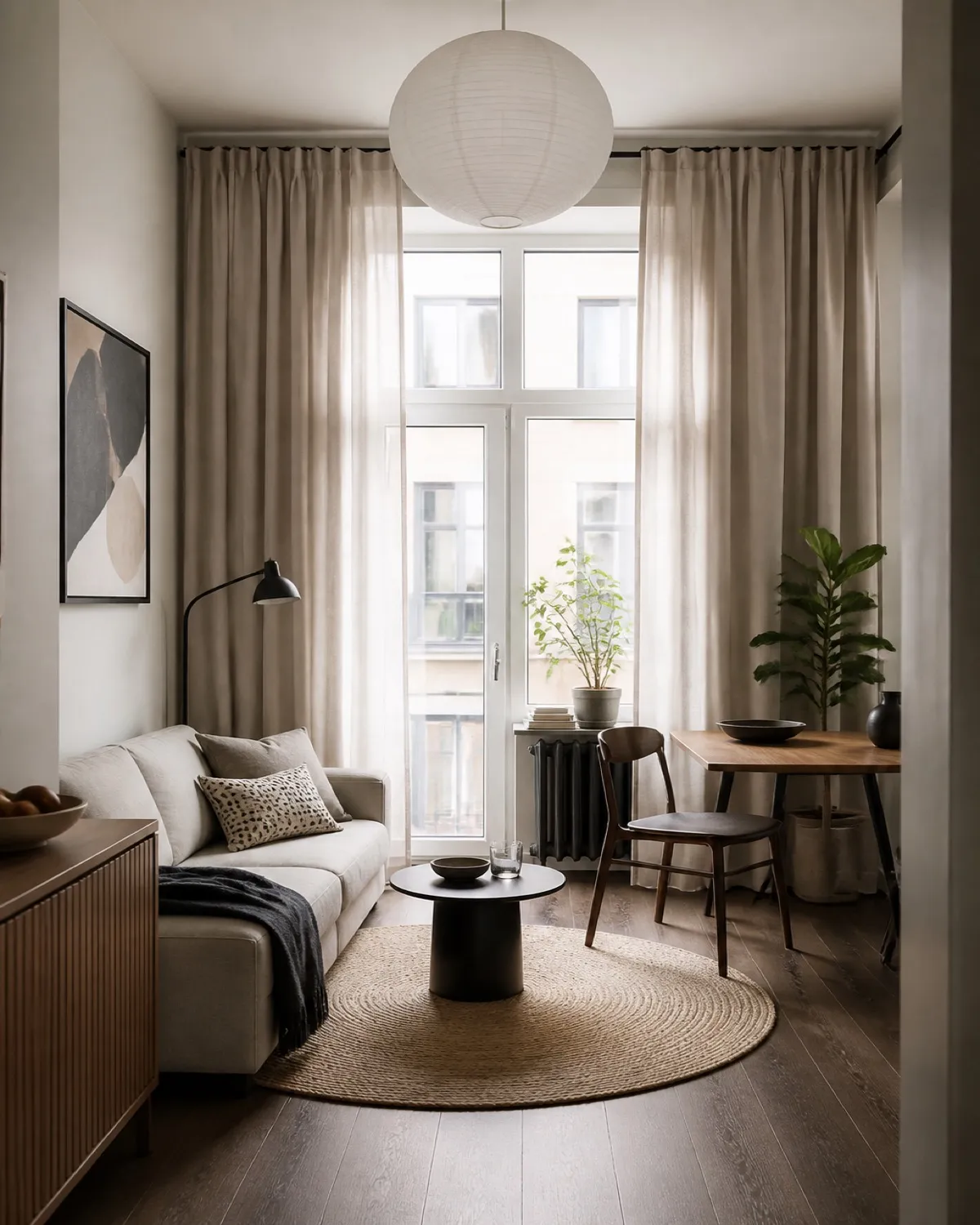
If your space is compact, also browse small apartment living room ideas — many modern principles double as space strategies.
Layout and seating
1. Anchor the room with a conversation triangle
Sofa, primary chair, and a secondary perch (stool, bench, or smaller chair) should face a shared center — usually the coffee table — not only the television. Modern rooms feel stylish when people can talk without shouting across a runway.
If you primarily watch screens, still leave at least one seat that can angle toward guests. A room that only faces glass often feels unfinished when the screen is off.
2. Pull furniture off the walls when circulation allows
Floating a sofa a few inches (or more) can make a room feel designed rather than temporary. Leave a clear walkway behind if the plan requires it; modern style still needs function.
3. Mix seating heights for depth
A deep sofa with a lower lounge chair and an occasional stool creates magazine-like layers. Matching heights flatten the composition.
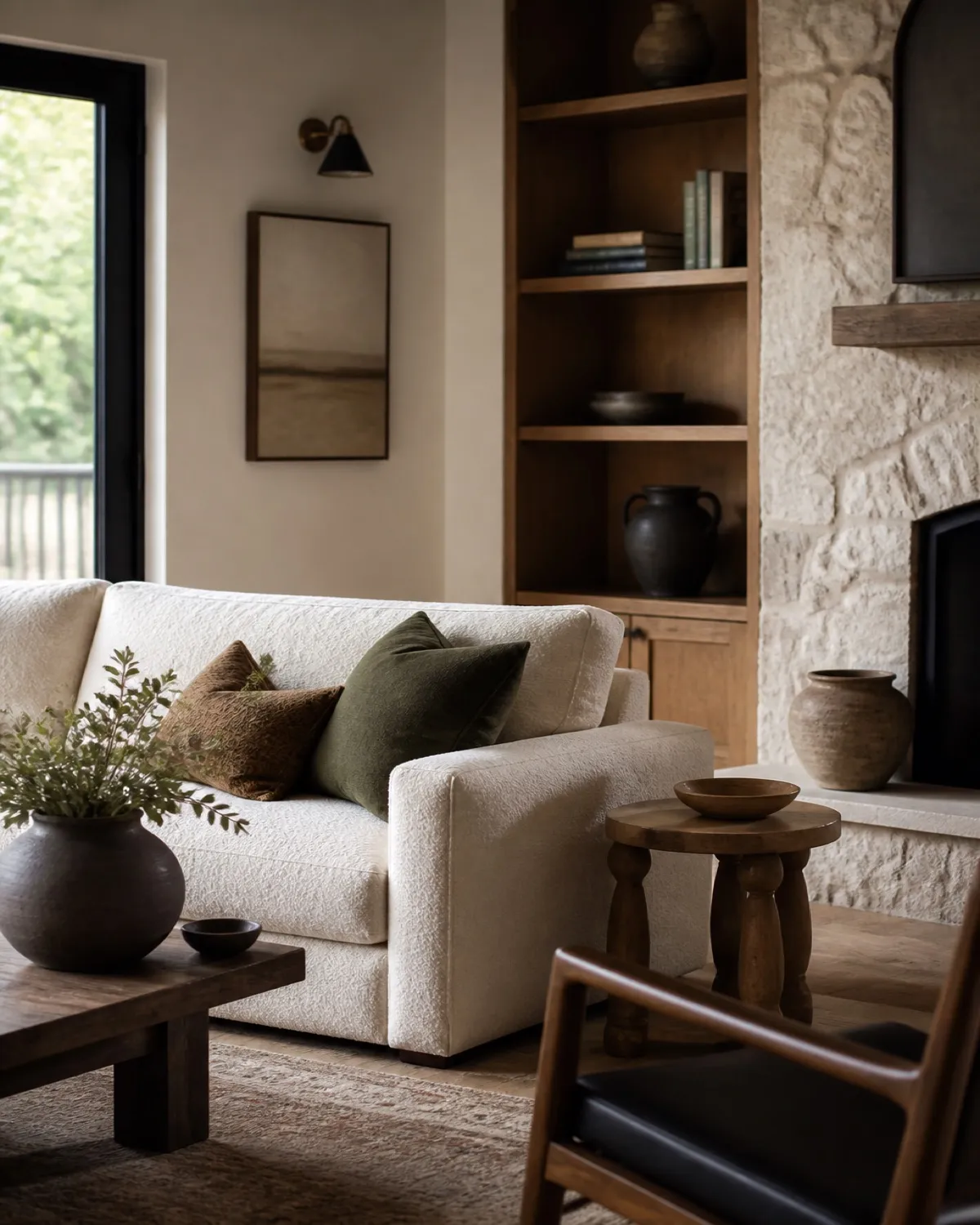
One wood-legged accent chair angled toward the sofa completes the conversation triangle without a matching set. Choose a quiet upholstery — black leather-look or a similar dark hide — so the silhouette stays modern.
4. Choose a sofa silhouette with quiet confidence
Track arms, gentle curves, or a simple boxy form can all read modern. Avoid overly ornate rolls if you want a contemporary line. Prioritize comfort depth you will actually use.
5. Leave negative space as a design material
Modern rooms breathe. If every corner holds a plant stand, side table, and sculpture, the plan starts to look crowded rather than curated. Empty floor is part of the style.
Rugs, floors, and grounding
6. Size the rug to the seating group
Front legs of sofas and chairs should rest on the rug so the zone reads as one composition. A floating island rug under only the coffee table shrinks the room visually.
When in doubt, size up. A rug that is slightly too large almost always looks more intentional than one that is slightly too small.
A 6-by-9 abstract grey rug is a practical choice when the sofa and chair legs need a larger field than a compact rectangle.
7. Prefer low-contrast pattern or solid texture
Loud geometric rugs can date quickly. Natural fibers, subtle tone-on-tone pattern, or a quiet wool field feel modern longer and photograph cleanly.
8. Let floors show at the edges intentionally
A rug that nearly wall-to-wall can feel plush; a rug with a revealed border of floor can feel more architectural. Choose based on whether you want softness or graphic clarity.
Lighting for a stylish modern room
9. Stop relying on a single ceiling fixture
Overhead light alone makes surfaces flat. Add a floor lamp for ambient height, a table lamp for glow, and optional wall wash or picture light for art.
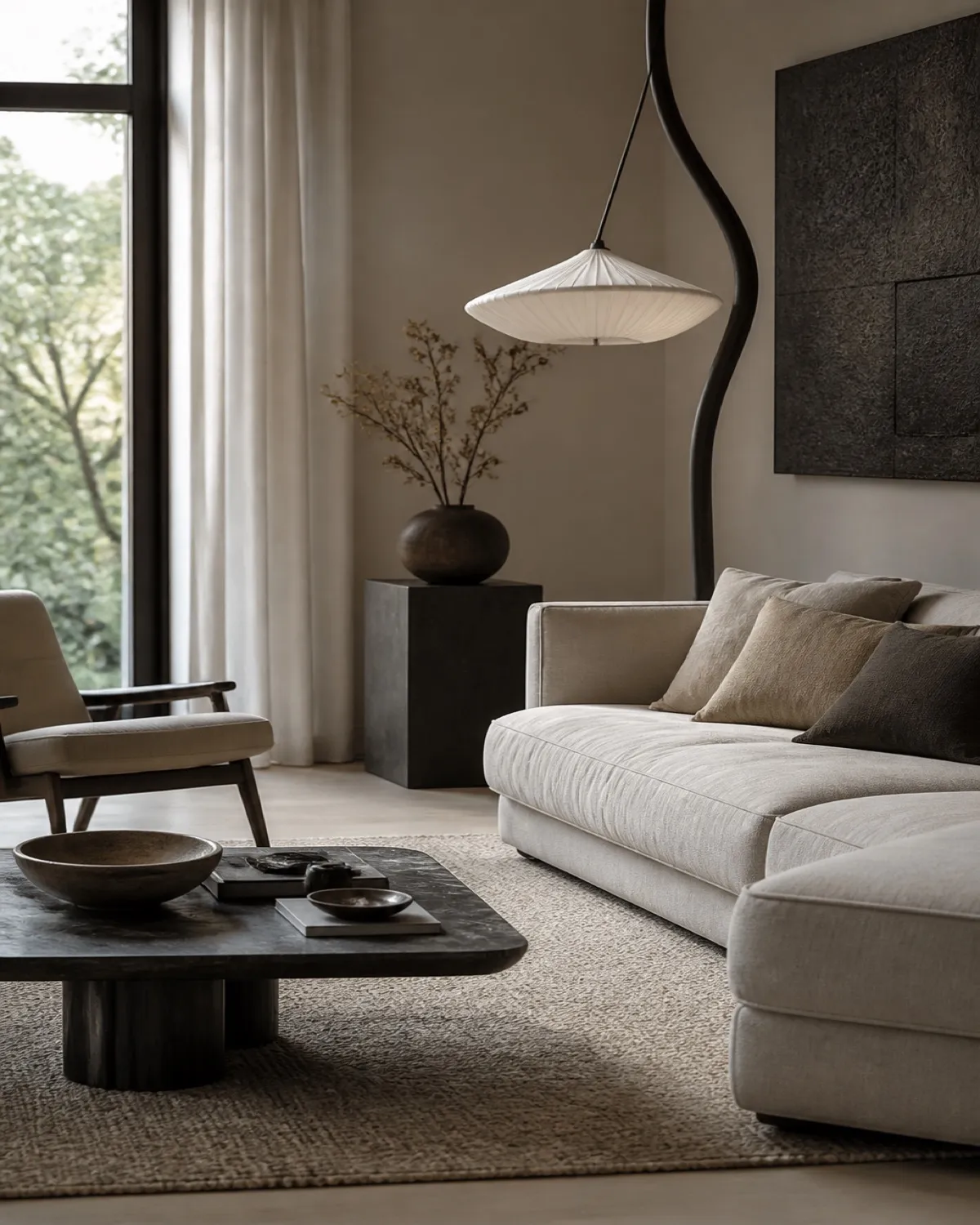
A wood floor lamp beside the sofa does the ambient job without adding another metal finish. One sculptural stem is enough; swap the shade if you want the room quieter or cozier.
If you want more light at the sofa without a second fixture, a dual-socket wood lamp with separate pull chains can warm the seating group while the ceiling stays off.
10. Keep bulb temperature warm and consistent
Mixed cool and warm bulbs make materials look unsettled. Modern interiors look more expensive when light is even and warm enough for evening.
11. Choose one sculptural light as punctuation
A single distinctive lamp or pendant can carry personality. Three competing statement lights cancel each other out.
12. Dim where you can
Dimmers turn a modern living room from daytime gallery to evening lounge without changing furniture. Atmosphere is a lighting skill.
Materials, color, and finishes
13. Build a short material story
Wood + textile + one mineral (stone, ceramic, plaster) is enough. Adding every trendy finish at once — boucle, brass, black metal, terrazzo, lacquer — reads as a moodboard, not a home.
14. Use a calm field color, then deepen selectively
Warm white, stone, or soft taupe walls let furniture silhouettes lead. A deeper accent can appear in a chair, art, or cabinetry — not on every wall if you want longevity.
15. Align metal finishes
Modern rooms look sharper when lamp, hardware, and table bases share a related metal family. Mixed metals work only when one clearly dominates.
16. Embrace matte more than gloss
High-gloss surfaces amplify clutter and fingerprints. Soft matte walls and ceramics feel calmer and more contemporary in daily life.
Tables, surfaces, and styling
17. Style the coffee table in threes — then stop
One tall object, one book stack, one living or low element. Leave open space for a cup and remote. Over-styling is the fastest way to lose a modern edge.
Refresh the vignette seasonally if you like, but resist adding a fourth and fifth object “just because the table looks empty.” Empty is part of modern composition.
Closed storage underneath makes that edit easier: remotes and extra books leave the top, so the three objects can stay.
18. Keep side tables purposeful
A side table should hold a lamp or a drink, not become a second display shelf. If it overflows weekly, the storage system elsewhere needs attention.
19. Edit media clutter into closed volumes
Visible cable nests and device stacks undermine even the best sofa. Baskets, media cabinets, and routed cords are modern essentials — invisible ones.
20. Choose art with breathing room
One large piece or a tight pair beats a busy gallery wall in many modern living rooms. Leave margin around frames so walls do not feel like bulletin boards.
A single round wood mirror can be that piece: it gives the wall a rest, and it throws lamp and window light back into the seating group.
On a narrower wall, a 24-inch round keeps the same idea — one circle, wood frame, borrowed light — without asking the plaster to host a 36-inch statement.
Softness without losing the modern line
21. Add textile weight at the sofa
A structured throw and two well-scaled pillows soften architecture without inventing a new color story. Match pillow scale to sofa depth.
22. Curtains that skim, not skimpy
Floor-kissing panels in a near-wall tone look tailored. Short cafe curtains rarely support a modern living room’s vertical line.
23. Bring in one living element
A branch, a substantial plant, or a simple vase with seasonal stems interrupts hard rectangles. Avoid a plant shop explosion that fights the furniture plan.
Habits of a stylish modern home
24. Reset surfaces nightly
Modern style is fragile when daily life piles up. A five-minute clear of the coffee table and sofa edge protects the design more than a new accessory.
25. Change seasonally in textiles, not in furniture
Rotate throws and pillows; keep major pieces stable. Constant furniture churn is expensive and rarely looks more modern — just more unsettled.
Explore more gathering-space inspiration in Nestlyra’s living room category.
Common mistakes in modern living rooms
Going all gray and cold. Cool gray everything can feel temporary and corporate. Warm the palette with wood, clay, or soft stone.
Buying matching sets. Sofa + loveseat + identical tables often look catalog-bound. Mix one primary seating piece with complementary shapes.
Rug too small. The most common stylish-home failure. Measure the seating group, then size up.
Television as the only focal point. Even if you watch often, balance the screen with seating that can face conversation and soft lighting that does not glare.
Trend stacking. Boucle + arched mirrors + fluted everything + checkerboard can cancel into noise. Choose one or two motifs and let them breathe.
Ignoring circulation. A beautiful coffee table that blocks walking paths is not modern — it is inconvenient.
FAQ
How do I make a living room look modern on a budget?
Edit first, then improve lighting and the rug. A clear floor plan and warm lamps change perception more than a full furniture swap. Add or replace one strong seating piece when you can.
What colors are best for a modern living room?
Warm neutrals with one deeper supporting tone tend to age well. Pure stark white can work if textiles and wood add warmth. High-chroma accent walls date faster than quiet fields.
Does a modern living room have to be minimalist?
No. Modern can be layered and soft. The difference is hierarchy: one clear seating story, controlled finishes, and surfaces that are not overcrowded. See layered living rooms for collected depth.
How should I arrange furniture around a TV?
Angle or float seating so conversation still works when the screen is off. Keep the TV on a calm wall plane; avoid surrounding it with busy shelves that compete for attention.
What is the first upgrade for a stylish modern living room?
Lighting and rug sizing. Together they define zones and mood. Decorative accessories should come after the room’s bones feel right.
Can modern living rooms feel cozy?
Yes — through textiles, warm bulbs, soft acoustics, and wood. Cozy and modern meet when comfort is designed, not when clutter is added for “warmth.”
Conclusion
Modern living room ideas succeed when style serves how you gather. Clear seating relationships, a properly scaled rug, warm layered light, a short material story, and nightly surface edits create a room that looks stylish in photos and feels welcoming in person.
Start with layout and light. Soften with textiles. Stop decorating before every surface is full. That restraint is what makes a contemporary home feel considered — and lasting. Revisit the plan once a season; edit more often than you buy.
Continue with layered living room styling or browse more ideas in Nestlyra’s living room section.
Save for later
Pin this idea
Designed for Pinterest — tall visuals, clear titles, and room ideas you can revisit when you decorate.